
Somewhere in your company right now, there’s a great candidate sitting in limbo. They aced the interviews. Everyone liked them. And yet, three weeks later, nobody has said yes, because nobody has said no either.
This isn’t a talent problem. It’s a decision-making problem. And it’s one of the most expensive, least-talked-about issues in hiring today.
Nobody Wants to Be the One Who Said Yes

Here’s the uncomfortable truth: the more people you add to a hiring decision, the less anyone feels personally responsible for it. Psychologists call this diffusion of responsibility, and it plays out in hiring loops constantly.
When one hiring manager makes the call, they own it. If the hire doesn’t work out, they know why. But when you’ve got 5 stakeholders — the hiring manager, two team leads, HR, and a “culture fit” interviewer nobody quite remembers adding — the accountability gets spread so thin that everyone is quietly waiting for someone else to commit first.
So, the feedback trickles in. “I liked them, but let’s see what the others thought.” “I’m good either way.” “Can we get one more round just to be sure?” Nobody is against the candidate. Nobody is fully for them either. And that mushy middle ground is where great candidates slip away.
The Math Nobody Does Before Adding Another Interviewer
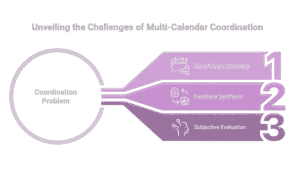
Every additional stakeholder doesn’t just add one more opinion — it adds an entire coordination problem. Scheduling gets harder because now you need 5 calendars to align instead of two. Feedback synthesis takes longer because someone has to actually read and reconcile 5 different scorecards, some of which contradict each other.
And contradictions are inevitable. Ask five people to evaluate the same candidate and you’ll get five different frameworks in their heads, even if they’re technically using the same rubric. One person weighs technical depth heavily, another cares more about communication style. A third is silently comparing the candidate to someone who failed in a similar role two years ago. None of this gets written down as “criteria” — it just shows up as vague hesitation in a debrief meeting.
The result: a process that was supposed to reduce risk by getting more eyes on a decision ends up adding risk, because now you’re making a decision by committee, and committees are notoriously bad at making clear, fast calls.
Top Candidates Don’t Wait Around
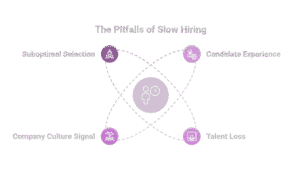
Here’s what a lot of hiring teams get wrong: they treat a slow process as merely “thorough.” Candidates don’t see it that way. If someone is genuinely strong, they have options — and every extra week your process takes is a week another company gets to make an offer first.
Good candidates also read your process as a preview of what it’s like to work at your company. A hiring loop with seven rounds and unclear decision-making signals an organization where nothing moves fast, where consensus is prized over ownership, and where getting anything approved requires herding cats. That’s not a great pitch, even if it’s not what you meant to communicate.
There’s also a quieter cost: the candidates who do wait it out aren’t always your best ones. Sometimes it’s simply that they didn’t have another offer on the table. You can end up selecting for patience rather than talent — which is a strange thing to optimize for.
So, What Actually Fixes This?
The instinct is to say, “just involve fewer people,” but that’s often not realistic — teams genuinely need input from multiple angles, especially for senior or cross-functional roles. The fix isn’t fewer stakeholders. It’s clearer roles for the stakeholders you have.
- Give one person the actual decision, not just a vote: Everyone else should be advisors, not co-owners. A hiring manager who has final say — and knows they have final say — behaves completely differently than one who’s waiting for a room to agree. Make this explicit before the process starts, not after a stalemate.
- Assign each interviewer a specific thing to evaluate, not a general impression: Instead of five people all forming a vague opinion on “is this person good,” split the evaluation: one person owns technical depth, one owns collaboration style, one owns domain experience. This turns five vague opinions into five specific, non-overlapping data points — which is much easier to synthesize than five overlapping gut checks.
- Set a decision deadline before the loop even starts: Not “we’ll figure it out after debrief” — an actual date. Decisions expand to fill the time available for them. If everyone knows feedback is due by Thursday and a decision comes Friday, the fence-sitting shrinks dramatically because there’s no infinite runway to keep hedging.
- Kill the tie-breaker meeting habit: If your default response to mixed feedback is “let’s get everyone in a room to discuss,” you’re often just adding another layer of diffusion, not resolving anything. A better default: the decision-owner reviews the specific, structured feedback (see above) and makes the call. Meetings should be for exceptions, not standard procedure.
- Treat “no strong opinion” as data, not neutrality: A lukewarm review isn’t actually neutral — it’s information. If someone’s lukewarm, ask what would have made them enthusiastic. Often there’s a real concern hiding behind the hedge and surfacing it directly is faster than letting it quietly drag the group toward “let’s pass, just to be safe.”