
Talent shortage is not a myth. There are genuine gaps in supply — in AI, cybersecurity, leadership. Skills are evolving faster than people can keep up, experienced candidates move quickly, and in some domains, demand genuinely outpaces supply. That part is real.
But here’s a pattern worth examining. A significant portion of the difficulty organizations face comes from inside — processes, expectations, and habits that make an already tight market feel even tighter than it is.
Searching for exact matches in a market that rarely has them
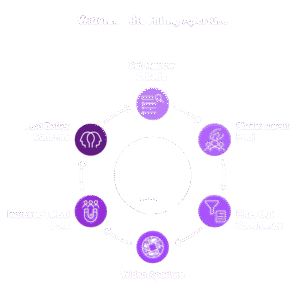
There’s an understandable tendency in hiring to seek candidates who have done this exact job before, in a similar environment. It feels safer, more predictable. But in today’s market, adjacent experience often performs just as well — sometimes better. Someone who solved a similar problem in a different context brings fresh perspective alongside proven capability.
When criteria is set too narrowly, the talent pool shrinks — not because people don’t exist, but because most of them are being filtered out before they’re ever seriously considered. Widening the aperture, even slightly, can change how the market feels entirely.
Hiring processes that move slower than the market
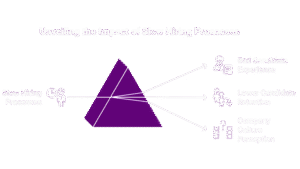
Strong candidates — especially those in high demand — often have multiple conversations happening at once. Long or opaque processes create friction at exactly the wrong moment. A few patterns that consistently slow things down:
- Too many sequential interview rounds with overlapping coverage
- Long gaps between stages with little communication in between
- Feedback that arrives too late, or not at all
There’s also a subtler effect: candidates read process as a signal about culture. A slow, unclear hiring experience can suggest a slow, unclear working environment — which shapes who accepts an offer and who quietly moves on before the process concludes.
Job descriptions carrying more than one role’s worth of expectations
It’s common for job descriptions to accumulate requirements over time — each stakeholder adding their priorities until the role spans three different skill profiles and ten different expectations. This usually isn’t deliberate. It often reflects genuine uncertainty about what the role really needs to accomplish.
But an overloaded description either finds no one (because no single person fits) or attracts candidates who disengage once the day-to-day reality is more focused than the posting suggested. Roles defined around a clear problem to solve tend to fill faster, and with better long-term outcomes.
Overlooking the passive market

Most hiring effort focuses on active candidates — people already applying, in the market, ready to move now. That’s a relatively small slice of available talent at any given time.
A much larger portion of skilled professionals are not actively looking, but would consider the right opportunity under the right circumstances. They typically share a few things in common:
- They’re doing okay in their current role, but not particularly excited about it
- They’re open to conversations, but not browsing job boards
- They respond to relationships and timing — not postings
Engaging them early — before a role opens, before urgency sets in — is often the difference between a search that takes weeks and one that drags on for month
Internal talent that goes unmapped
When hiring gets difficult, the instinct is to look externally. But internal capability is frequently underutilized — not because the skills don’t exist, but because there’s limited visibility into what people can do beyond their current role. Skills exist, ambition exists, but the pathways and systems to surface them often don’t.
The result is external hires for capabilities already sitting inside the organization, along with the cost, time, and onboarding friction that comes with it. When internal movement is easier and more visible, the pressure on external hiring drops noticeably.
Exits that could be prevented — but often aren’t tracked well enough

Compensation is a real factor in attrition — but rarely the whole story.
People also leave when:
- Growth plateaus
- Decisions feel slow or opaque.
- Work stops feeling meaningful.
These reasons are harder to measure, so they tend to get less systematic attention.
But every preventable exit sends an organization back into a hiring cycle — with all the time, cost, and disruption that brings. Retention and hiring are two sides of the same equation. Treating them separately means solving the same problem twice.
Timing: hiring that starts too late
Most hiring is triggered by urgency — a resignation, a new headcount approval, an unexpected gap. By that point, the best-fit candidates may have moved on or accepted other offers weeks earlier. The search starts reactive, which compounds every other challenge.
Organizations that hire well tend to stay connected to strong people continuously — not waiting for a vacancy to begin the conversation. That kind of relationship-building is hard to systematize, but it's one of the most consistent differentiators between companies that feel the shortage acutely and those that manage it more smoothly.