
AI interviews are being adopted fast, and for good reason. They promise quicker hiring, cleaner pipelines, and less dependency on human bandwidth.
But for business leaders, the real question is not “Does it save time?” It is: What is it quietly changing about how we hire and who we end up hiring?
Because AI does not just speed things up. It reshapes the entire decision system behind hiring.
You Are Locking in a Fixed Idea of “Good Talent”.
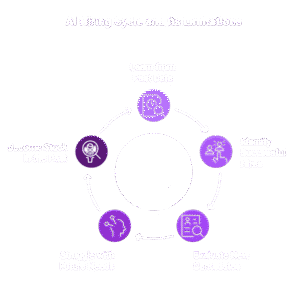
AI learns from past hiring data. It looks at who you hired before and who performed well, then uses that to judge new candidates.
Sounds logical. But here is the issue.
Your future talent needs will not look like your past hires.
If your company is entering new markets, building new products, or changing direction, the profiles you need will shift. AI struggles here because it is designed to recognize patterns, not break them.
So instead of evolving with your business, your hiring can start to feel stuck in the past.
It Rewards the People Who “Interview Well” Not Always the Ones Who Work Well.
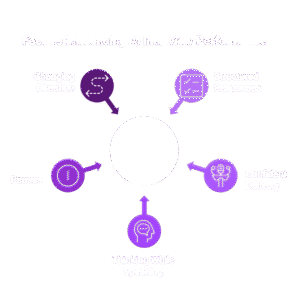
AI interviews are built around structured responses. Clear answers. Well-formed thoughts. Confident delivery.
But in reality, some of the best performers:
- Think while speaking
- Take pauses
- Change direction mid-answer
A human interviewer can pick up on depth in those moments. AI often cannot.
Over time, this creates a bias toward polished candidates over thoughtful ones.
This works fine for roles where communication is key. But for roles that require problem-solving or original thinking, it can lead to safe hires instead of strong hires.
Global Hiring Becomes Easier But Less Accurate.
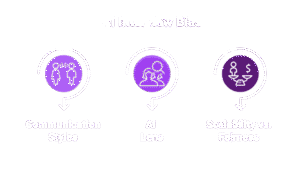
AI allows companies to run the same interview process across different regions. That sounds efficient.
But people do not communicate or present themselves the same way everywhere.
For example:
- In some places, short, direct answers sound confident. In others, the same answer can come off as rude or lacking depth.
AI does not naturally understand these differences. It applies the same lens to everyone.
So while your hiring becomes more scalable, it can also become less fair without you realizing it.
Your Hiring Funnel Gets Cleaner But Also Narrower.
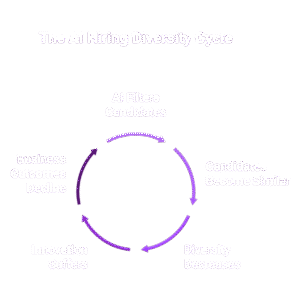
AI is great at filtering. It removes noise and brings forward top candidates.
But there is a hidden downside. Everyone at the top starts looking similar.
Same backgrounds. Same way of answering. Same career paths.
This does not happen overnight. But over time, your teams can lose variety in thinking and approach, which directly impacts innovation and problem-solving.
You do not notice it in hiring reports. You notice it later in business outcomes.
Candidates Are Already Learning How to Beat the System.
AI interviews assume candidates are being natural.
But candidates adapt quickly.
Today, many are:
- Practicing answers specifically for AI formats
- Learning which keywords or structures perform better
This creates a situation where candidates are not being evaluated on ability, but on how well they understand the system.
Human interviewers can adjust when something feels scripted. AI usually cannot.
Where AI Actually Adds Serious Value?
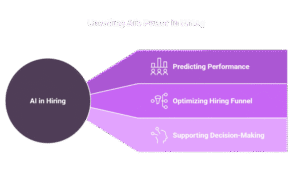
AI is not useless. Its biggest strength is something most companies do not fully use, which is pattern tracking over time.
AI can help you understand:
- Which types of hires stay longer
- Which interview criteria actually predict performance
- Where candidates drop off in your hiring process
This turns hiring into something you can improve systematically, not just manage.
In this role, AI is extremely powerful, not as a decision-maker, but as a decision support system.
It Can Quietly Hurt Internal Mobility.
Most AI interview systems are built for external / new candidates.
In-grown talent may not always fit neatly into those formats:
- Their strengths are based on real work, not interview answers
- Their growth potential may not match past data patterns
If AI becomes the main filter, internal talent can get overlooked, even when they are the better long-term choice.
This can weaken your ability to build talent from within, which is a critical advantage for many organizations.
So, Is It Viable? Yes, If You Use It with Clear Limits.
AI interviews work very well when:
- You are hiring in large volumes
- The role is clearly defined
- You need consistency in early-stage screening
They start to struggle when:
- Roles are evolving
- You are hiring for judgment and not just technical skill
- You need to spot unconventional talent