
Everyone loves the idea of pay transparency right up until they see someone else’s number.
That’s the part the LinkedIn posts skip. Transparency gets sold as this clean, moral upgrade to how companies pay people. Show the numbers, kill the secrecy, watch trust go up. And sure, in theory, that’s the pitch. In practice, once the numbers are actually out there, a whole new set of problems shows up that nobody warned you about.
Let’s get into what actually happens.
The comparison problem doesn’t go away; it just gets sharper
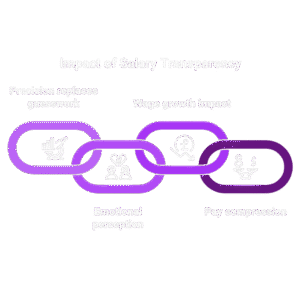
Before transparency, people compared salaries based on rumor, guesswork, and whatever their cousin told them their friend makes. Vague, but manageable. The moment you post a real number or a real band, that guesswork disappears and gets replaced by precision. And precision is brutal.
Someone making 8 lakh who finds out the person two desks away is making 9.5 lakh for what looks like the same job doesn’t care about the nuance behind that gap. Maybe the other person:
- Negotiated harder
- Joined during a talent crunch
- Has three more years of a specific skill
None of that matters emotionally. What lands is: I’m getting less for the same work.
Transparency can also play out in a less obvious way.
Instead of raising underpaid employees to match the higher earners, companies could just as easily go the other direction and slow down pay growth for everyone.
If a gap looks hard to explain once it’s visible, the easiest fix isn’t always a raise. Sometimes it could just be holding everyone closer together, quietly, so the gap stops standing out.
Negotiation gets weird for everyone, not just the underpaid

Here’s a genuinely underdiscussed side effect: once salary ranges are public, candidates stop negotiating on the number and start negotiating on everything else:
- Title
- Level
- Remote flexibility
- Joining bonus
- Anything that isn’t the base number sitting on the job post
That sounds fine until you realize it just moves the friction somewhere less visible. A recruiter now has to justify why two candidates entering at the “same” level have wildly different total packages, because the base is public but the extras aren’t. You’ve made one number honest and pushed the dishonesty into six other line items.
And for internal employees, negotiation basically dies. If the band is public, asking for more than the band’s ceiling looks like you’re asking for a mistake to be made, not a raise to be earned. People stop pushing, and managers stop having to explain themselves.
That’s not fairness. That’s just quieter underpayment.
Compression hits your best people hardest
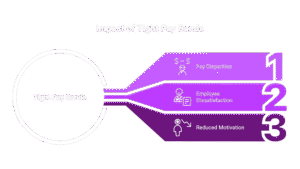
This is the part most leadership teams never see coming. Once a company makes pay bands public, the instinct is to keep those bands narrow. A wide band looks messy and invites too many questions. So, companies tighten it.
But a tight band creates a strange problem. Say a company’s band for a role runs from 6 lakh to 9 lakh. A one-year hire comes in at 6.5 lakh. A five-year veteran doing similar work is sitting at 8.5 lakh. That’s a 2-lakh gap for four extra years of experience and a track record of actual results. On paper, that gap looks small enough to feel like an insult.
And it’s your best people who feel this the most. The ones who’ve actually earned more through real results. They stop comparing themselves to the market. They start comparing themselves to the newer hire sitting just 2 lakhs below them, when the actual difference in what they bring to the table feels much bigger than that.
Transparency didn’t reward what they built. It just made the gap between them and everyone else look smaller than it really is.
The Colorado problem: sometimes companies just opt out
When Colorado passed one of the strictest pay transparency laws in the US in 2021, a chunk of companies didn’t comply by getting more transparent. They complied by pulling Colorado off the map.
Job postings started carrying a line that basically said, “this remote role is not available to Colorado residents,” because excluding an entire state was administratively easier than:
- Pricing a role honestly
- Defending it
At one point, an engineer created a tracking site called Colorado Excluded that had documented close to a hundred companies, including names like Airbnb, Nike, and IBM, doing exactly this.
That’s the real-world version of what happens when transparency rules get treated as a compliance headache instead of a culture shift. Companies don’t always rise to meet the disclosure.
Sometimes they just route around it.
What actually works, without the idealism
If you’re building or managing a transparency policy, a few things genuinely help, not because they sound nice, but because they hold up under pressure.
- Publish ranges, not points: A band gives you room to account for experience and performance without looking like you’re hiding something. A single number invites a fight every time someone falls short of it.
- Explain the logic before you explain the number: People can accept a gap they understand. What they can’t accept is a gap they discover on their own with no context attached.
- Audit before you announce: Transparency exposes whatever inequities already existed in your pay structure. If you go public before fixing the obvious gaps, you’re not building trust, you’re broadcasting your problems with a timestamp on them.
- Train managers to have the conversation, not dodge it: Most of the damage from transparency doesn’t come from the number itself. It comes from a manager who freezes up when someone asks, “why does she make more than me” and gives a vague answer. A prepared, honest answer defuses most of this. Silence doesn’t.
Pay transparency isn’t a bad idea. It’s just not the finish line people treat it as. It’s the starting point for a much harder conversation about whether your pay structure can actually survive being looked at directly.
Most can’t, not without some real work first.